Blood Pressure Explained: Numbers, Categories, Risks
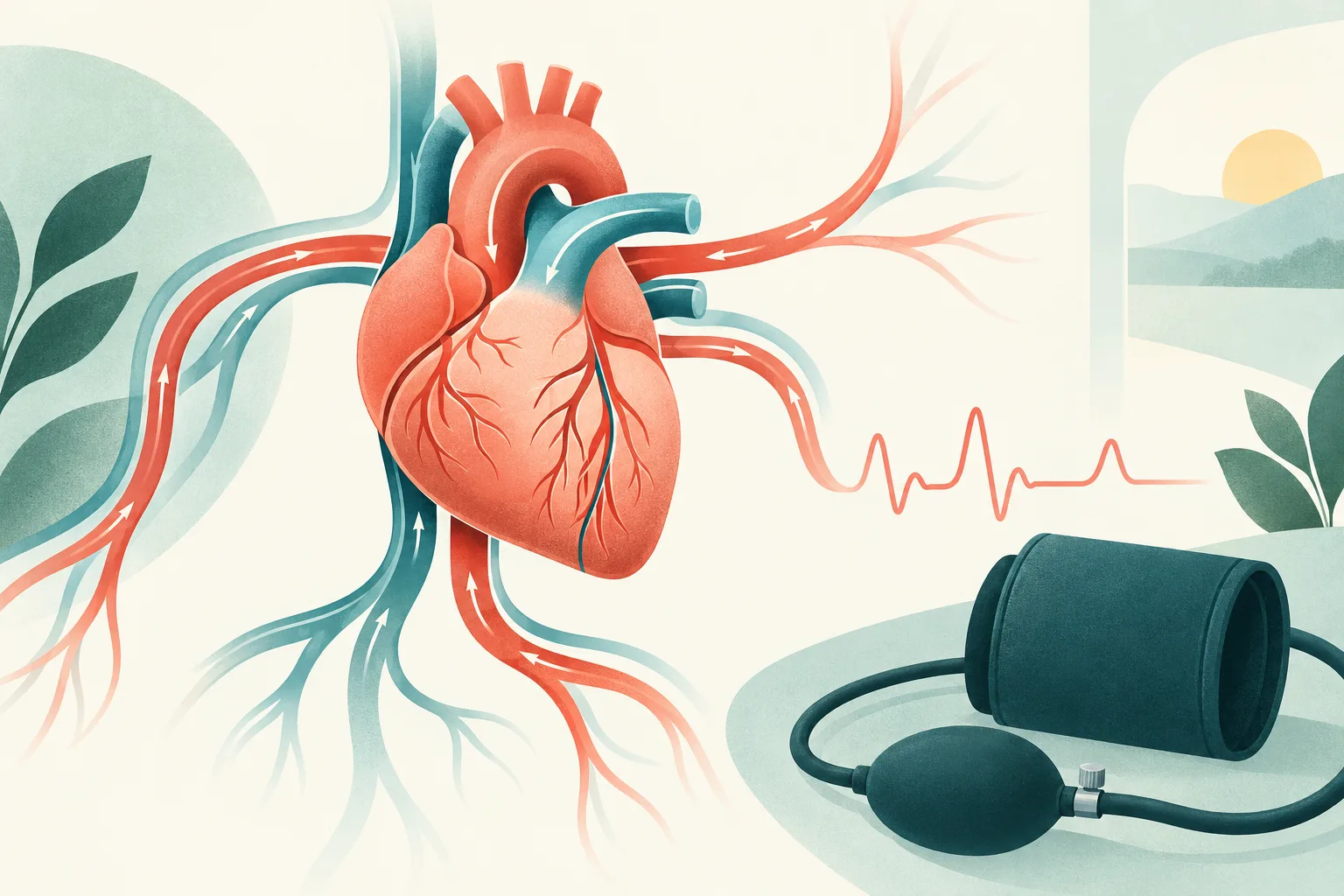
Blood pressure is the force of your blood against the walls of your arteries. It is written as two numbers — for example 120/80 mmHg — and it is one of the most important numbers for your long-term health: high blood pressure is the leading modifiable risk factor for heart attack, stroke and kidney failure.
The two numbers
- Systolic (upper number): the pressure when the heart contracts and pushes blood out.
- Diastolic (lower number): the pressure when the heart relaxes between beats.
Both matter. After about age 50 the systolic number becomes the stronger predictor of cardiovascular risk, because arteries stiffen with age.
Categories
| US (2025 AHA/ACC guideline) | Systolic | Diastolic | |
|---|---|---|---|
| Normal | < 120 | and | < 80 |
| Elevated | 120–129 | and | < 80 |
| Stage 1 hypertension | 130–139 | or | 80–89 |
| Stage 2 hypertension | ≥ 140 | or | ≥ 90 |
| Hypertensive crisis range | > 180 | and/or | > 120 |
The 2025 AHA/ACC guideline kept these categories unchanged from 2017. European guidelines (2023 ESH guideline) define hypertension from 140/90 and call 130–139/85–89 "high normal". The reading reports on this site use the US categories — try 128/82 or 142/88.
Why it is called the "silent killer"
High blood pressure rarely causes symptoms. Nearly half of US adults have hypertension by the US definition, and many don't know it. Over years, the extra pressure damages the inner lining of the arteries, thickens the heart muscle and harms the small vessels of the brain, kidneys and eyes. See Effects of High Blood Pressure on the Body.
What raises blood pressure
- Age and family history
- High salt intake and low potassium intake
- Excess weight and physical inactivity
- Alcohol (more than 1–2 drinks a day)
- Sleep apnea, chronic kidney disease, some hormonal disorders
- Medications such as NSAID pain relievers, decongestants and some birth control pills
Low blood pressure
A systolic number below 90 or a diastolic number below 60 counts as low — as long as the other number is not raised ("low" is a common label, not one of the AHA/ACC categories). In healthy, active people that is often normal. It matters when it causes dizziness, fainting or confusion, and very low readings (systolic under 70 or diastolic under 40) need prompt attention. See low blood pressure tips.
Keeping it in range
Lifestyle changes lower blood pressure by 4–11 mmHg each — less salt, more potassium, the DASH diet, regular exercise, weight loss and less alcohol. Many people also need medication; it is safe, effective and often inexpensive. Start with proven home remedies and measure correctly at home: How to Check Your Blood Pressure at Home.
Sources: 2025 AHA/ACC high blood pressure guideline (Hypertension 2025;82:e212–e316) · 2023 ESH guidelines for the management of arterial hypertension (J Hypertens 2023) · American Heart Association: High blood pressure · MedlinePlus: Low blood pressure
Check a blood pressure reading
Related guides
- How to Check Your Blood Pressure at Home
- How High Blood Pressure Is Diagnosed
- Effects of High Blood Pressure on the Body
- Blood Pressure Medication: The Main Types Explained
- Home Remedies for High Blood Pressure That Work
- Diet for High Blood Pressure: The DASH Plan
- 5 Foods That Help Lower Blood Pressure
- Low Blood Pressure: 5 Foods and Habits That Help
- High Blood Pressure During Pregnancy
This guide is general health education, not personal medical advice. Check with your doctor before you change what you eat, how you exercise or any medication you take. In an emergency, call 911 (US) or your local emergency number.