Low Blood Pressure: 5 Foods and Habits That Help
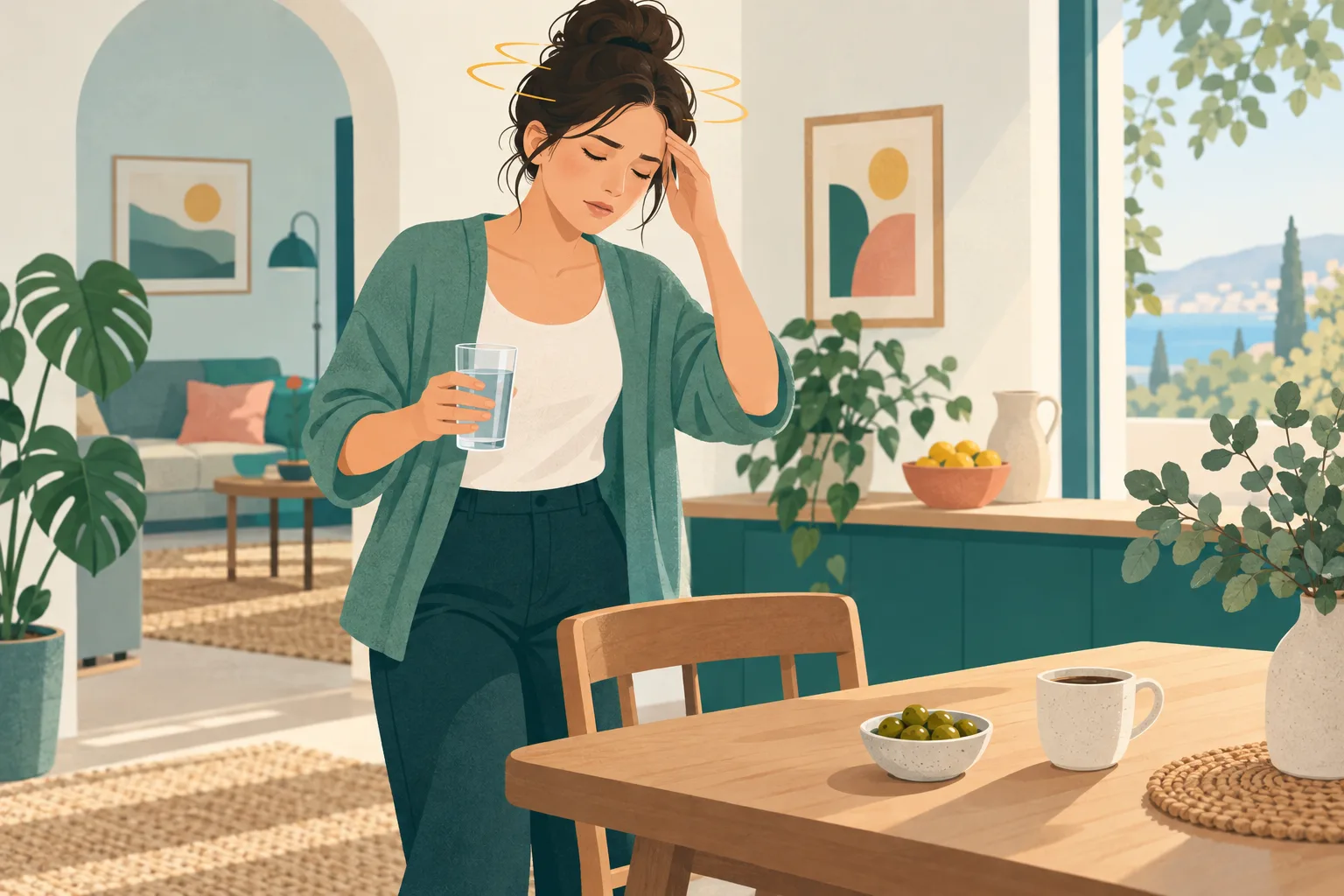
Low blood pressure (a systolic number below about 90 or a diastolic number below about 60 mmHg) is usually harmless — many fit, healthy people live with it. But if it makes you dizzy when you stand up, tired or prone to fainting, a few food and lifestyle measures can help. Always find out the cause first.
1. Water and fluids
Dehydration is the most common cause of symptomatic low blood pressure. Drinking enough — often 2–2.5 liters a day, more in heat or during exercise — raises blood volume. Drinking about 500 ml (2 cups) of water quickly can raise blood pressure within 15–30 minutes, a trick used for people who faint easily.
2. More salt — only with your doctor
For people with low blood pressure and no heart or kidney problems, doctors sometimes recommend more salt, for example salted broth, olives or salty snacks. This is the opposite of the advice for most people, so discuss it first.
3. Coffee or tea
Caffeine raises blood pressure temporarily, especially in people who don't drink it every day. A cup with breakfast can help with morning dizziness.
4. Small, frequent meals
Large, carbohydrate-heavy meals divert blood to the gut and can cause postprandial hypotension — dizziness after eating, common in older adults. Smaller meals with less refined carbohydrate help; so does avoiding alcohol with meals.
5. Foods rich in vitamin B12 and folate
Anemia from a lack of B12 or folate can cause low blood pressure symptoms. Eggs, fish, meat, dairy and fortified cereals provide B12; leafy greens, legumes and citrus provide folate. A blood test shows whether you are deficient.
Habits that help
- Stand up slowly: sit on the edge of the bed for a minute first.
- Cross your legs or tense your leg muscles when standing for long periods.
- Compression stockings can reduce pooling of blood in the legs.
- Avoid long hot showers, saunas and standing still in heat.
- Raise the head of your bed slightly if you are dizzy in the morning.
Common causes worth checking
Blood pressure medication or other drugs (diuretics, alpha blockers, antidepressants, Parkinson's drugs), dehydration, pregnancy, heart problems, hormonal disorders such as adrenal insufficiency, blood loss and nerve conditions affecting blood pressure control.
Sources: MedlinePlus: Low blood pressure · 2025 AHA/ACC high blood pressure guideline (Hypertension 2025;82:e212–e316)
Check a blood pressure reading
Related guides
- Blood Pressure Explained: Numbers, Categories, Risks
- How to Check Your Blood Pressure at Home
- How High Blood Pressure Is Diagnosed
- Effects of High Blood Pressure on the Body
- Blood Pressure Medication: The Main Types Explained
- Home Remedies for High Blood Pressure That Work
- Diet for High Blood Pressure: The DASH Plan
- 5 Foods That Help Lower Blood Pressure
- High Blood Pressure During Pregnancy
This guide is general health education, not personal medical advice. Check with your doctor before you change what you eat, how you exercise or any medication you take. In an emergency, call 911 (US) or your local emergency number.