Effects of High Blood Pressure on the Body
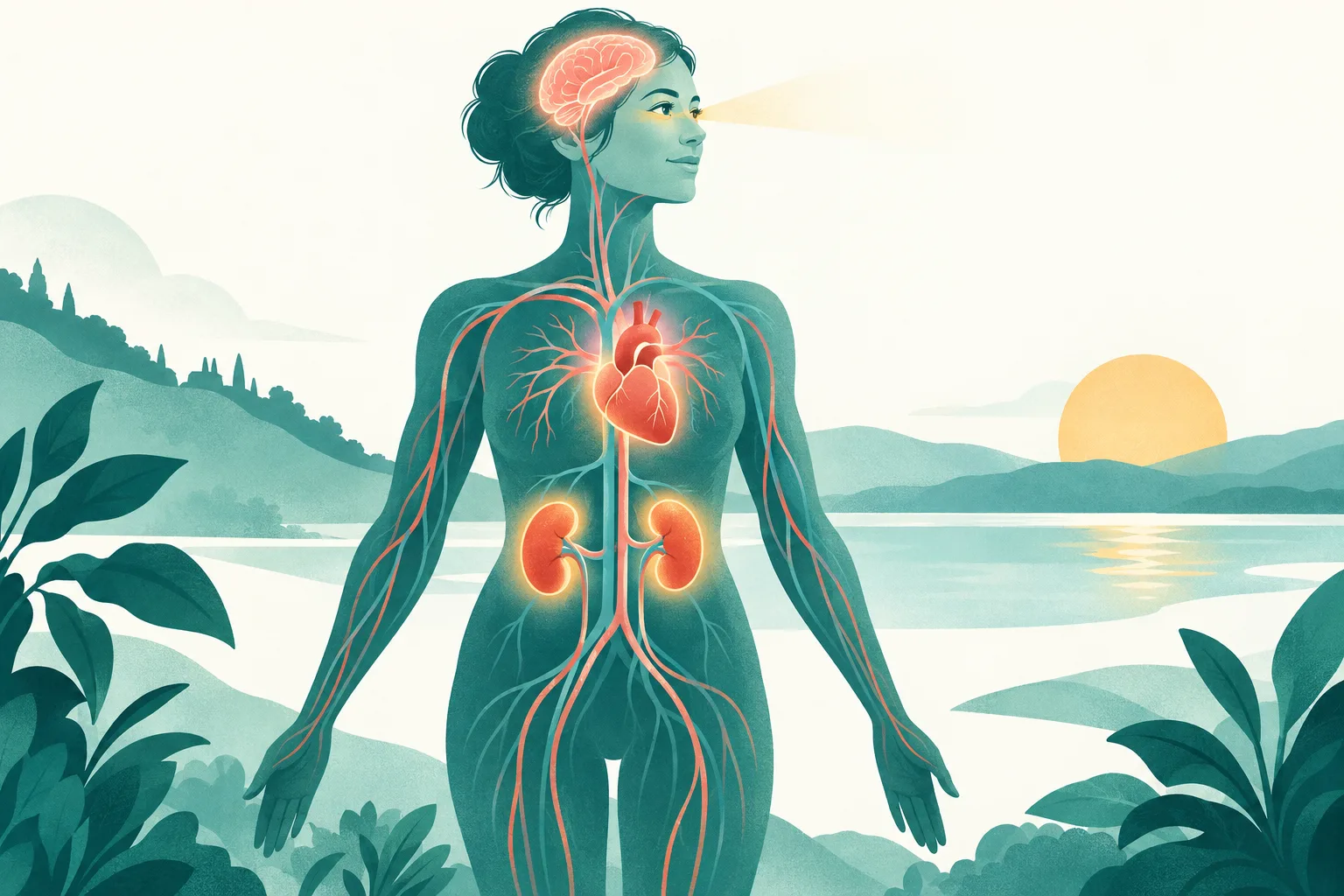
High blood pressure usually causes no symptoms, but year after year it strains the heart and damages blood vessels throughout the body. The good news: lowering it reduces the risk of these complications substantially — every 10 mmHg reduction in systolic pressure cuts major cardiovascular events by about 20%.
Arteries
Constant high pressure damages the inner lining of arteries. They become stiffer and narrower, and fatty plaques build up more easily (atherosclerosis). Weak spots can bulge into an aneurysm, for example in the abdominal aorta.
Heart
- Coronary artery disease and heart attack: narrowed coronary arteries reduce blood flow to the heart muscle.
- Left ventricular hypertrophy: the heart muscle thickens from pumping against higher pressure, which raises the risk of heart failure and arrhythmias.
- Heart failure and atrial fibrillation are both strongly linked to long-standing hypertension.
Brain
- Stroke: high blood pressure is the single most important risk factor for both ischemic and hemorrhagic stroke.
- Small-vessel damage and dementia: uncontrolled hypertension in midlife raises the risk of cognitive decline and vascular dementia later.
Learn more: Keeping Your Heart and Brain Healthy.
Kidneys
The kidneys filter blood through millions of tiny vessels. High pressure damages them, leading to protein in the urine and gradually declining kidney function. Hypertension is the second leading cause of kidney failure in the US — and damaged kidneys in turn raise blood pressure further. See kidney-friendly diet.
Eyes
Hypertensive retinopathy damages the blood vessels of the retina and can impair vision. Very high blood pressure can cause sudden vision loss.
Sexual function
Reduced blood flow can contribute to erectile dysfunction in men and reduced arousal in women. Some blood pressure medicines can also play a role — talk to your doctor rather than stopping them.
Hypertensive emergency
Readings above 180/120 with chest pain, shortness of breath, back pain, numbness or weakness, vision changes, difficulty speaking, confusion or a severe headache can mean acute organ damage. Call 911 (US) or your local emergency number. Without such symptoms, sit quietly for 5 minutes and measure again; if it is still that high, contact your doctor the same day.
Protecting your organs
Know your numbers, measure regularly, and work with your doctor on a target — for most adults below 130/80. Lifestyle changes and, where needed, medication protect every organ on this list. Start here: Home Remedies for High Blood Pressure That Work · Blood Pressure Medication: The Main Types Explained.
Sources: 2025 AHA/ACC high blood pressure guideline (Hypertension 2025;82:e212–e316) · American Heart Association: When to call 911 about high blood pressure · CDC: High blood pressure
Check a blood pressure reading
Related guides
- Blood Pressure Explained: Numbers, Categories, Risks
- How to Check Your Blood Pressure at Home
- How High Blood Pressure Is Diagnosed
- Blood Pressure Medication: The Main Types Explained
- Home Remedies for High Blood Pressure That Work
- Diet for High Blood Pressure: The DASH Plan
- 5 Foods That Help Lower Blood Pressure
- Low Blood Pressure: 5 Foods and Habits That Help
- High Blood Pressure During Pregnancy
This guide is general health education, not personal medical advice. Check with your doctor before you change what you eat, how you exercise or any medication you take. In an emergency, call 911 (US) or your local emergency number.