Blood Pressure Medication: The Main Types Explained
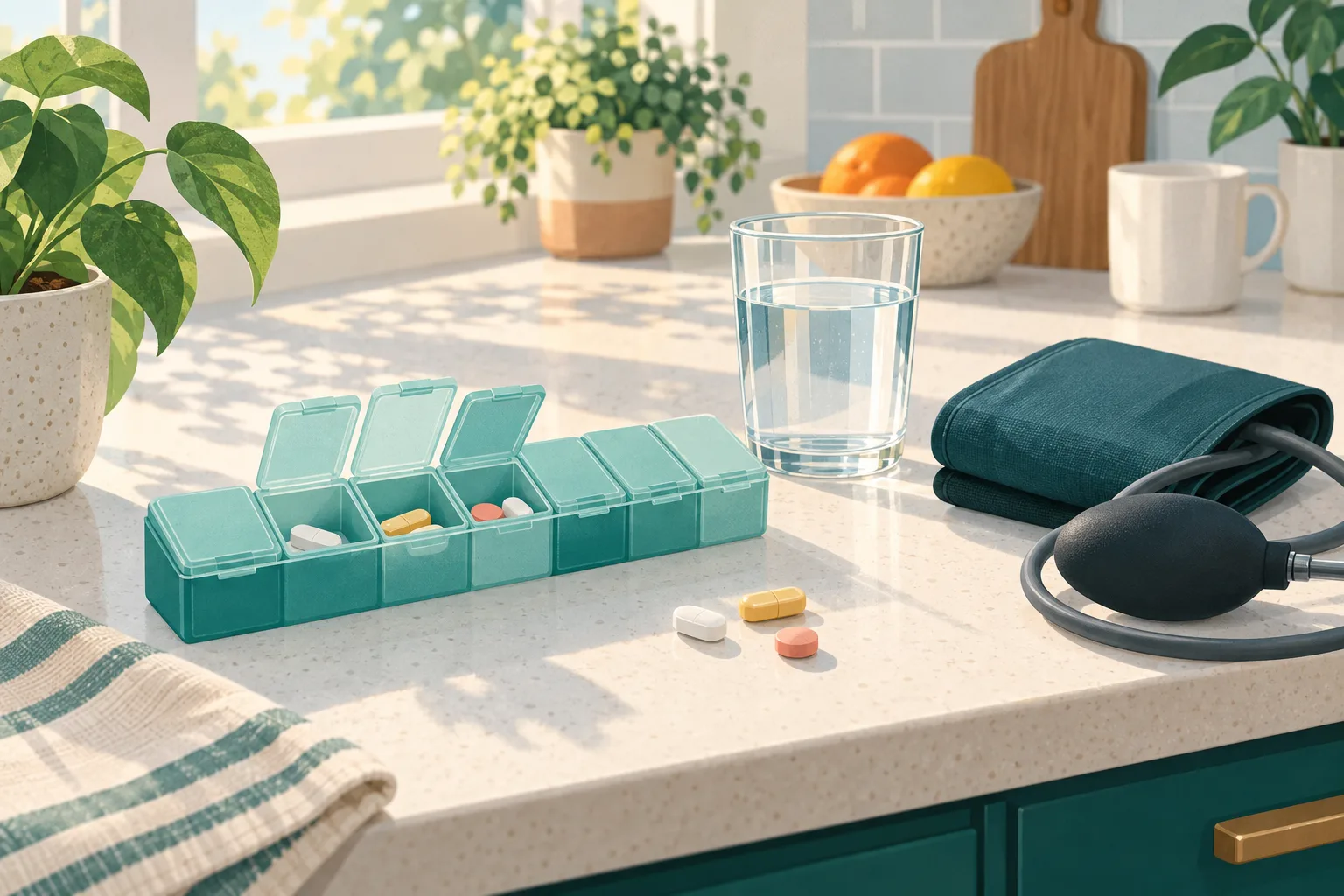
When lifestyle changes are not enough — or blood pressure is clearly high — medication protects your heart, brain and kidneys. Most modern blood pressure drugs are well tolerated, inexpensive as generics, and most people need two of them, often combined in one pill.
When medication is recommended
Under US guidelines: at 140/90 or higher for everyone, and from 130/80 if you already have heart disease, diabetes, chronic kidney disease or a high 10-year cardiovascular risk. The usual target for most adults is below 130/80.
The main drug classes
| Class | Examples | How it works | Common side effects |
|---|---|---|---|
| ACE inhibitors | lisinopril, enalapril, ramipril | Block a hormone system that narrows vessels | Dry cough; rarely swelling of lips/tongue (angioedema) |
| ARBs | losartan, valsartan, olmesartan | Block the same system at the receptor | Dizziness; high potassium |
| Calcium channel blockers | amlodipine, nifedipine | Relax the muscle in artery walls | Ankle swelling, flushing, headache |
| Thiazide-type diuretics | chlorthalidone, hydrochlorothiazide, indapamide | Help the kidneys remove salt and water | More urination, low potassium or sodium, gout |
| Beta blockers | metoprolol, bisoprolol, carvedilol | Slow the heart and reduce its force | Tiredness, cold hands, slow pulse |
| Mineralocorticoid receptor antagonists | spironolactone, eplerenone | Block aldosterone; used for resistant hypertension | High potassium, breast tenderness (spironolactone) |
First choices for most people are ACE inhibitors or ARBs, calcium channel blockers and thiazide-type diuretics. Beta blockers are mainly used with heart disease or certain arrhythmias. ACE inhibitors and ARBs are not combined with each other and must not be used in pregnancy.
Combination pills
Two drugs at low doses usually work better and cause fewer side effects than one drug at a high dose. Single-pill combinations make treatment simpler — and people take them more reliably.
Tips for treatment
- Take your medication at the same time every day; it works best when taken consistently.
- Keep measuring at home and bring your readings to appointments.
- Don't stop on your own when readings are good — they are good because of the treatment.
- Avoid regular use of NSAID pain relievers (ibuprofen, naproxen) and decongestants; they raise blood pressure.
- Report side effects — there is almost always an alternative.
Medication works best together with lifestyle changes: Home Remedies for High Blood Pressure That Work.
Sources: 2025 AHA/ACC high blood pressure guideline (Hypertension 2025;82:e212–e316) · MedlinePlus: High blood pressure
Check a blood pressure reading
Related guides
- Blood Pressure Explained: Numbers, Categories, Risks
- How to Check Your Blood Pressure at Home
- How High Blood Pressure Is Diagnosed
- Effects of High Blood Pressure on the Body
- Home Remedies for High Blood Pressure That Work
- Diet for High Blood Pressure: The DASH Plan
- 5 Foods That Help Lower Blood Pressure
- Low Blood Pressure: 5 Foods and Habits That Help
- High Blood Pressure During Pregnancy
This guide is general health education, not personal medical advice. Check with your doctor before you change what you eat, how you exercise or any medication you take. In an emergency, call 911 (US) or your local emergency number.