Animal vs. Plant Protein: What Your Body Needs
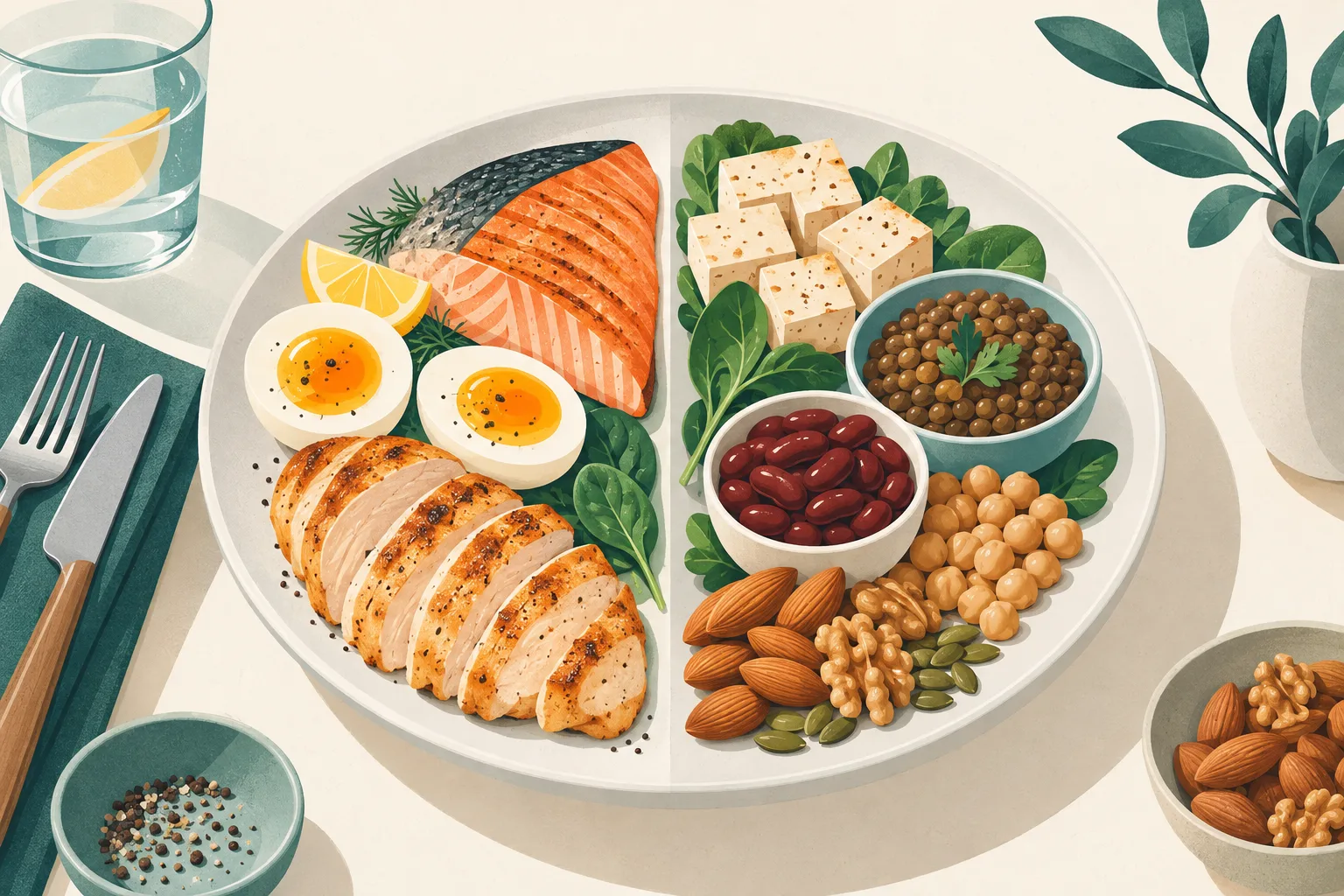
Protein builds and repairs muscles, bones, enzymes and immune cells. Animal foods are convenient, complete protein sources — but a well-planned plant-based diet can meet your needs too. What matters is enough total protein and a few key nutrients.
How much protein do you need?
The basic recommendation for adults is 0.8 g per kg of body weight per day — about 55 g for a 70 kg (154 lb) person. Older adults, people recovering from illness and those doing a lot of strength training often benefit from more, around 1.0–1.2 g/kg or higher.
Complete and incomplete proteins
Protein is made of 20 amino acids; 9 are essential because the body can't make them. Animal foods (meat, fish, eggs, dairy) contain all 9 in good proportions. Soy, quinoa and buckwheat are complete plant proteins too. Other plant foods are low in one or more essential amino acids — but eating a variety of legumes, grains, nuts and seeds over the day easily covers all of them. They don't need to be combined in the same meal.
What animal foods provide
- Vitamin B12 — found naturally only in animal foods. Vegans need fortified foods or a supplement.
- Iron — "heme" iron from meat is absorbed well. Plants (legumes, leafy greens, tofu) provide plenty of iron too, but it is absorbed less; vitamin C-rich foods with the meal improve absorption.
- Zinc — meat and seafood are rich sources; legumes, nuts and whole grains supply it as well.
- Omega-3 fats (EPA/DHA) — mainly from oily fish; algae oil is a plant-based alternative.
- Calcium and vitamin D — dairy and fish; fortified plant drinks are alternatives.
What plant proteins add
Legumes, nuts, seeds and whole grains bring fiber, potassium and healthy fats with little saturated fat. Diets higher in plant protein are associated with lower blood pressure, lower cholesterol and lower cardiovascular risk. Processed and red meat, by contrast, are linked to higher risk of heart disease and colorectal cancer when eaten often.
A balanced approach
- Spread protein over the day — 25–30 g per main meal helps muscles in older age.
- Favor fish, poultry, eggs, low-fat dairy, legumes, tofu and nuts.
- Keep red meat moderate and processed meat rare.
- Plant-based? Plan for B12, and keep an eye on iron, zinc, iodine, calcium, vitamin D and omega-3.
Related: Protein Shakes: Benefits, Risks and Who Needs Them · Calcium, Vitamin D and Exercise for Strong Bones
Sources: Dietary Guidelines for Americans · MedlinePlus: Nutrition
Check a blood pressure reading
Related guides
- Calcium, Vitamin D and Exercise for Strong Bones
- Protein Shakes: Benefits, Risks and Who Needs Them
- Which Dairy Product Is Best for You?
- Is Corn Healthy for You or Not?
- Dark Chocolate: Health Benefits and How Much
- 4 Health Benefits of Raisins
- How Plant Foods Support Your Immune System
- Gluten: What It Is and How It Affects Health
- Blood Pressure Explained: Numbers, Categories, Risks
- How to Check Your Blood Pressure at Home
This guide is general health education, not personal medical advice. Check with your doctor before you change what you eat, how you exercise or any medication you take. In an emergency, call 911 (US) or your local emergency number.